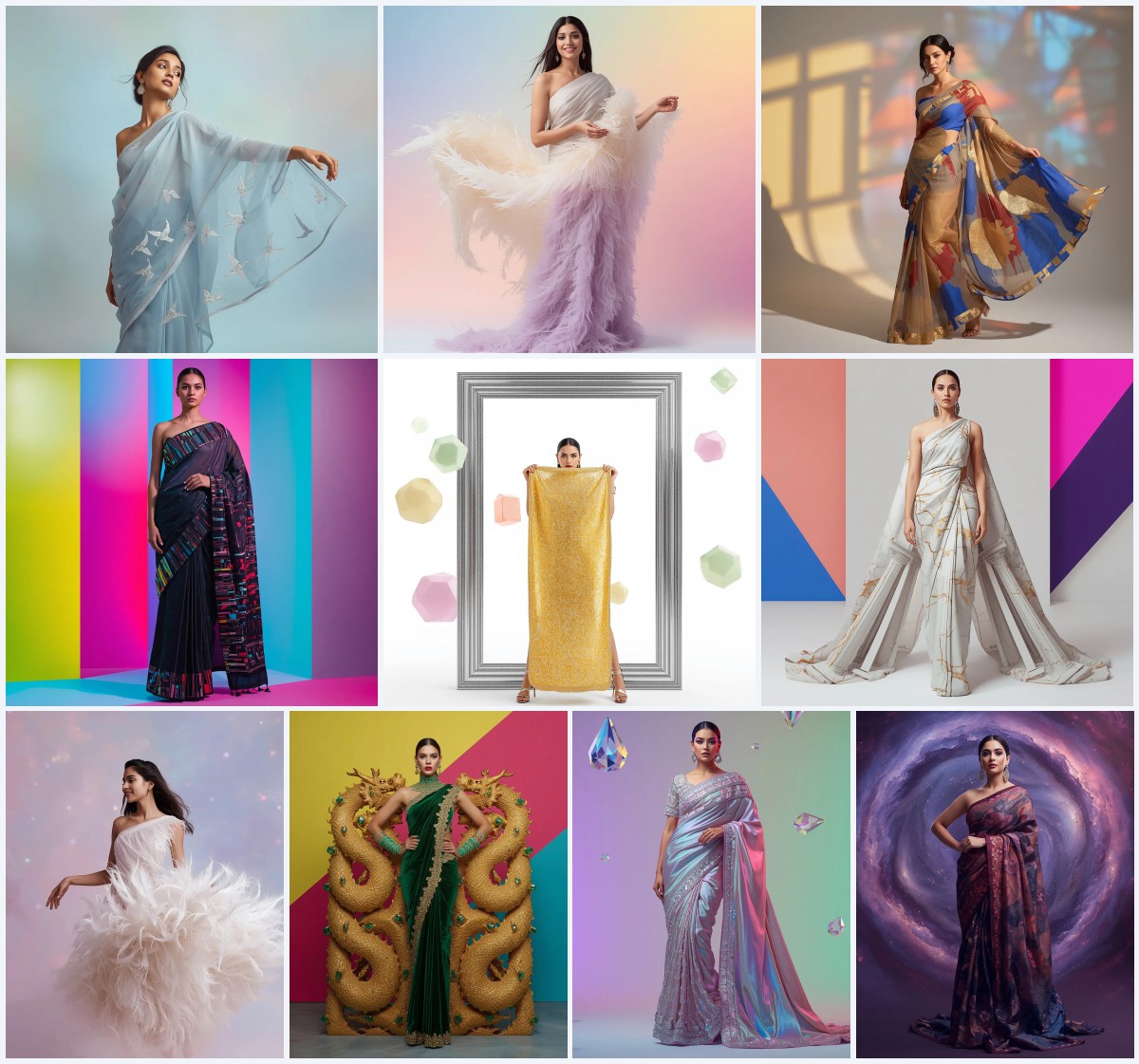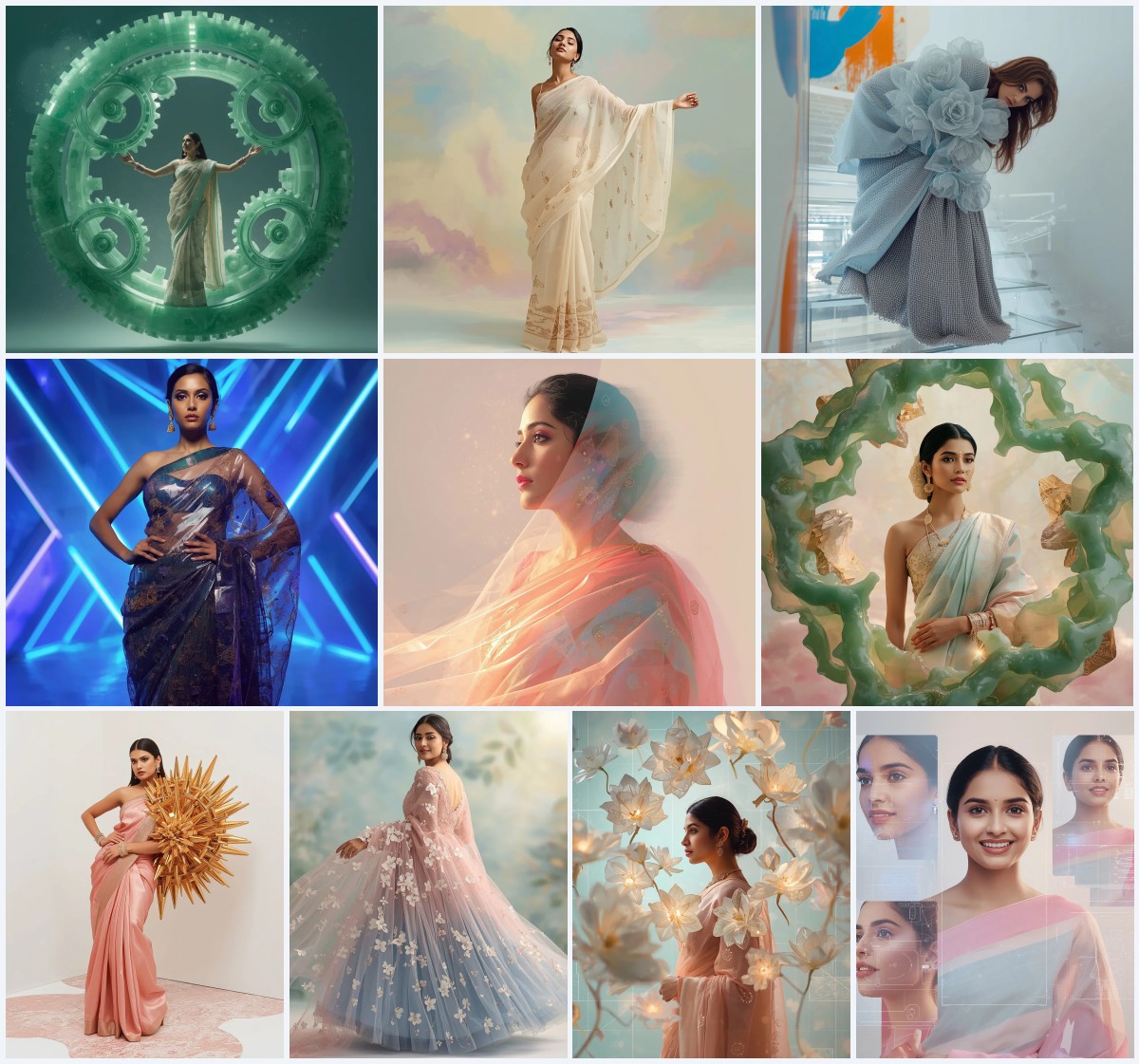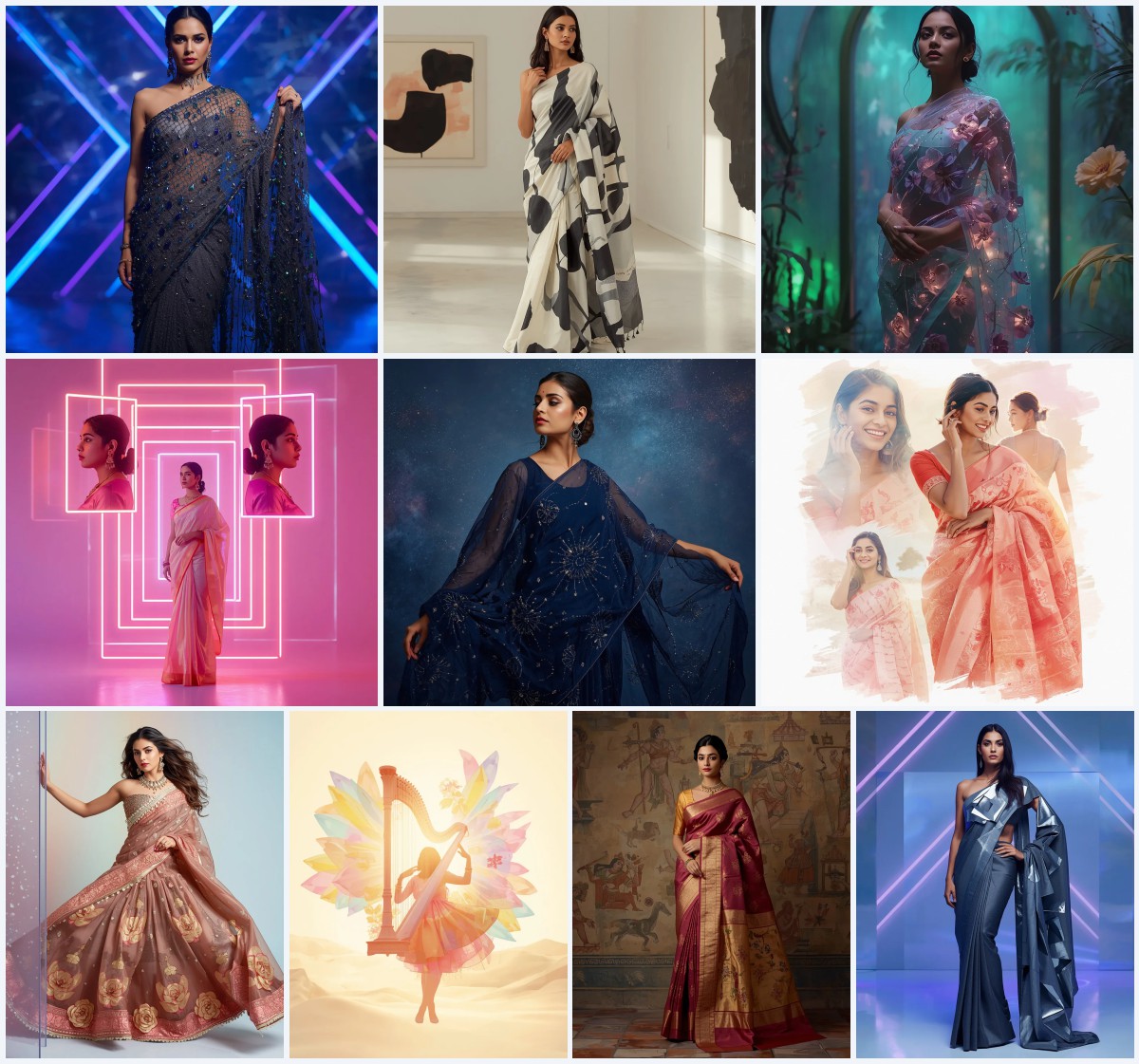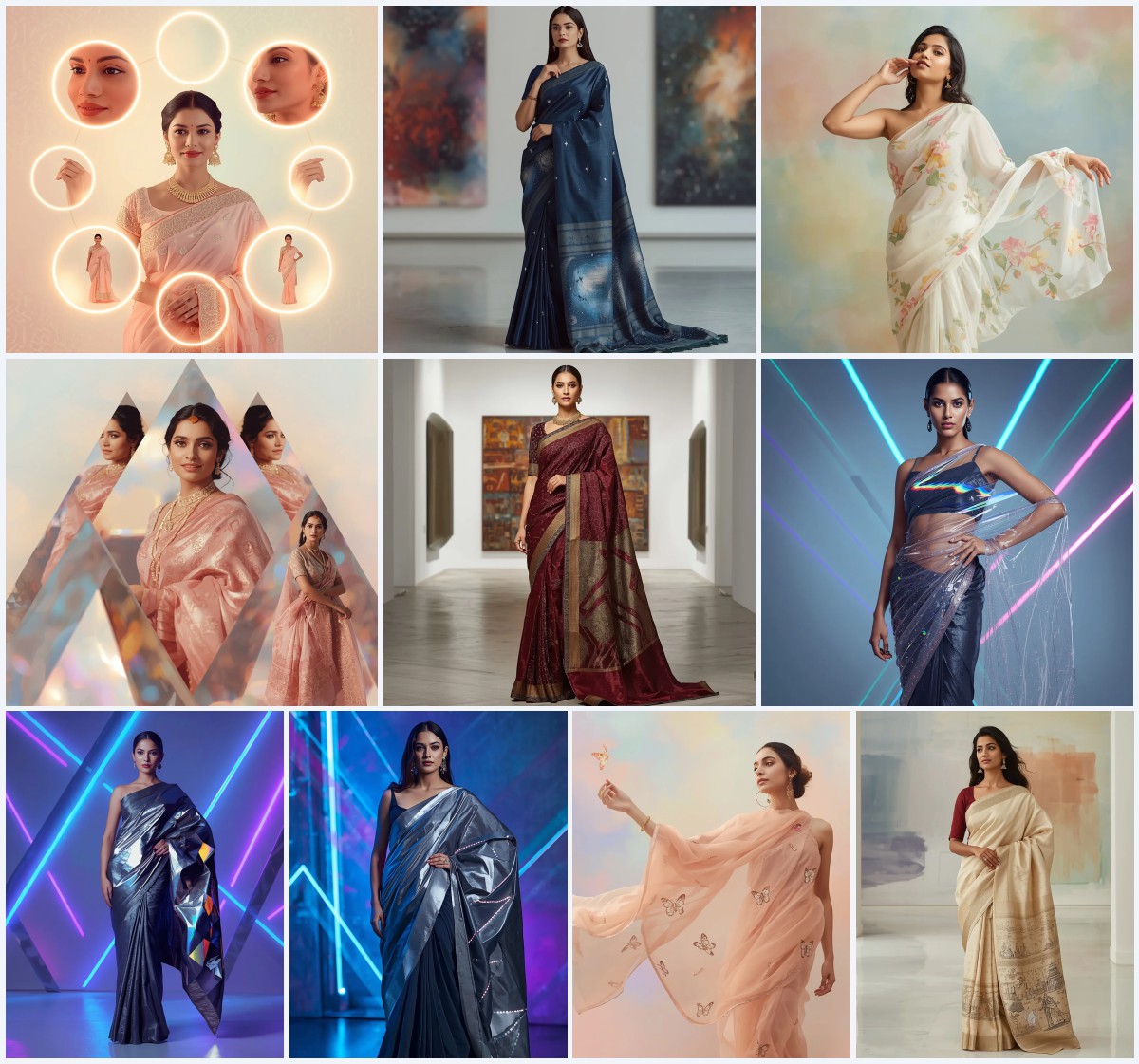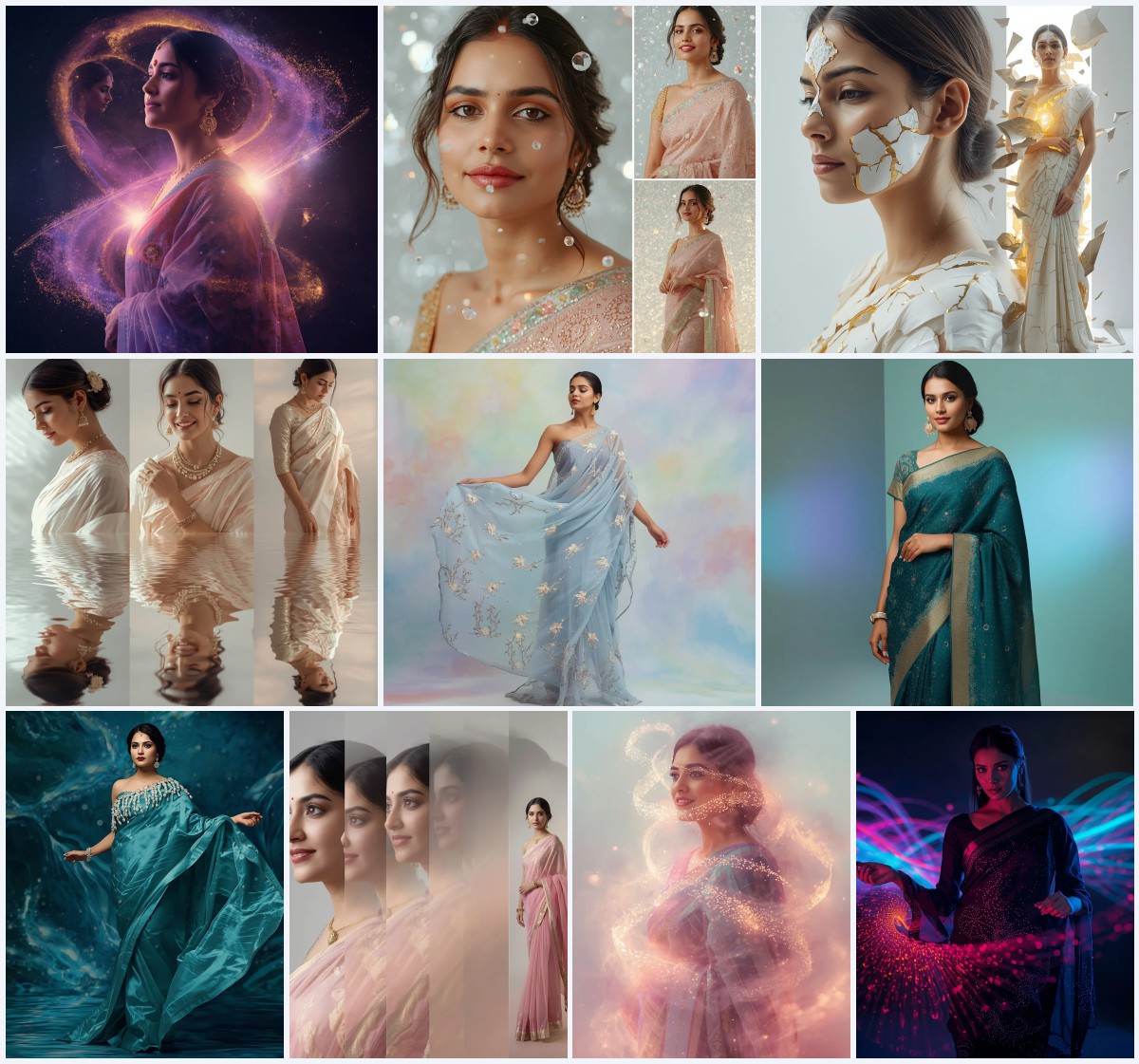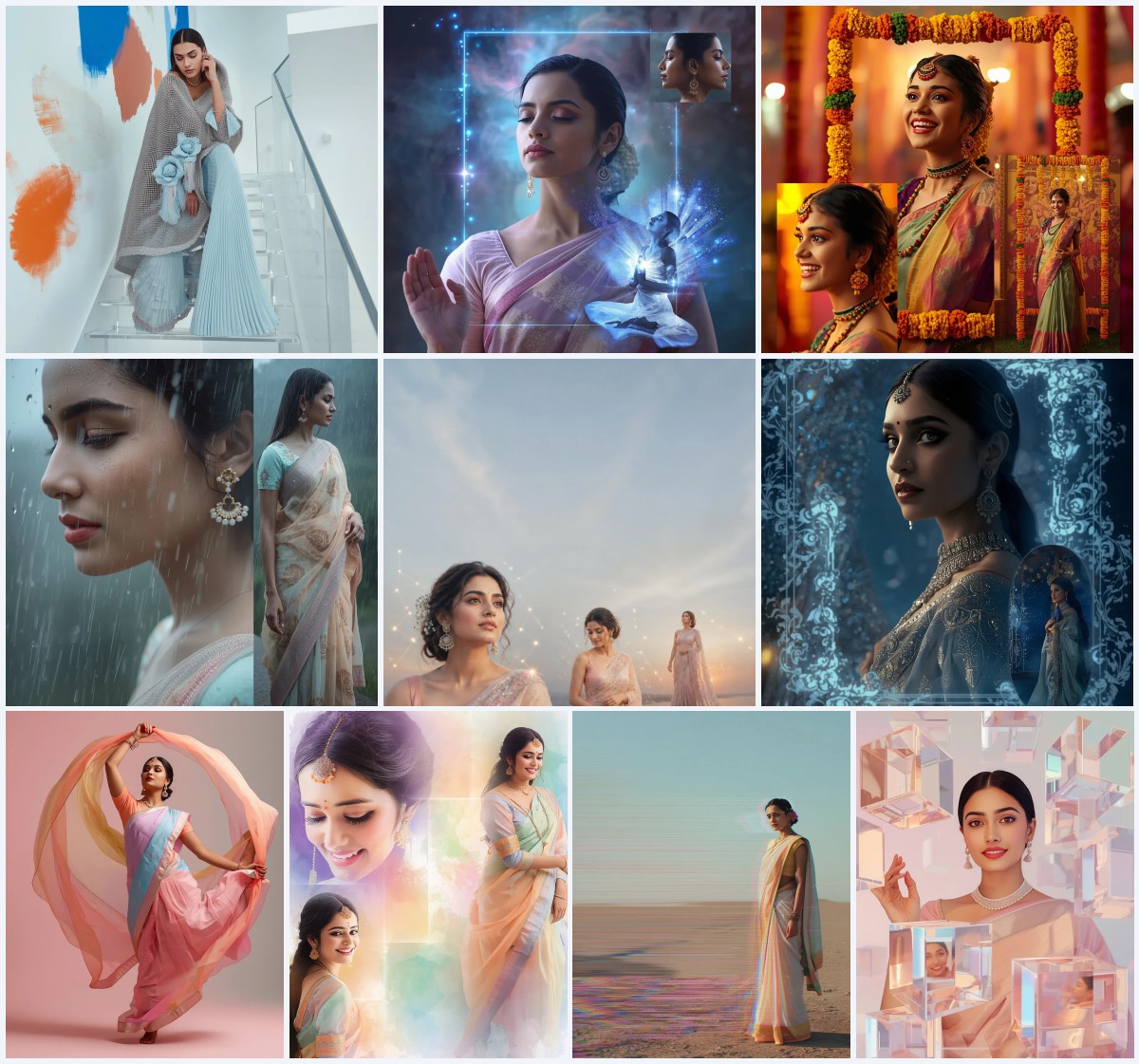


Discover the ultimate collection of creative AI prompts designed to generate breathtaking, diverse saree visuals featuring traditional Indian attire blended with futuristic, luxury, and artistic elements.
The traditional Indian saree is a symbol of grace, heritage, and timeless elegance. In the rapidly evolving landscape of AI-generated art, merging this classical attire with modern digital aesthetics has become a massive trend. Digital creators, designers, and social media influencers are constantly looking for ways to present traditional wear in fresh, innovative, and visually stunning formats. By utilizing advanced image generation prompts, you can now seamlessly combine the rich textures of a festive saree with avant-garde concepts like floating geometry, glowing texts, and surreal natural elements.
Whether you are creating content for an Instagram feed, designing a digital lookbook, or simply experimenting with the boundaries of AI art, having access to high-quality, descriptive prompts is essential. This guide provides ten distinct, highly detailed prompt concepts that explore different thematic styles. From retro-futuristic collages to spiritual and luxurious backdrops, these prompts are engineered to extract the highest level of detail, lighting, and emotional depth from modern AI image generators. They allow you to showcase the saree not just as clothing, but as a key element in a larger, imaginative narrative.
By understanding how to structure these prompts, you can control everything from the fabric's texture to the ambient lighting of the scene. Each prompt in this collection is crafted to produce high-resolution, professional-grade imagery that stands out. We will explore the mechanics behind these prompts, look at why these specific styles are capturing the internet's attention, and provide you with actionable steps to start generating your own masterpiece today. Let's dive into the world of AI-driven traditional fashion and discover how you can bring these diverse saree visuals to life.
What Are Diverse Saree Visuals?
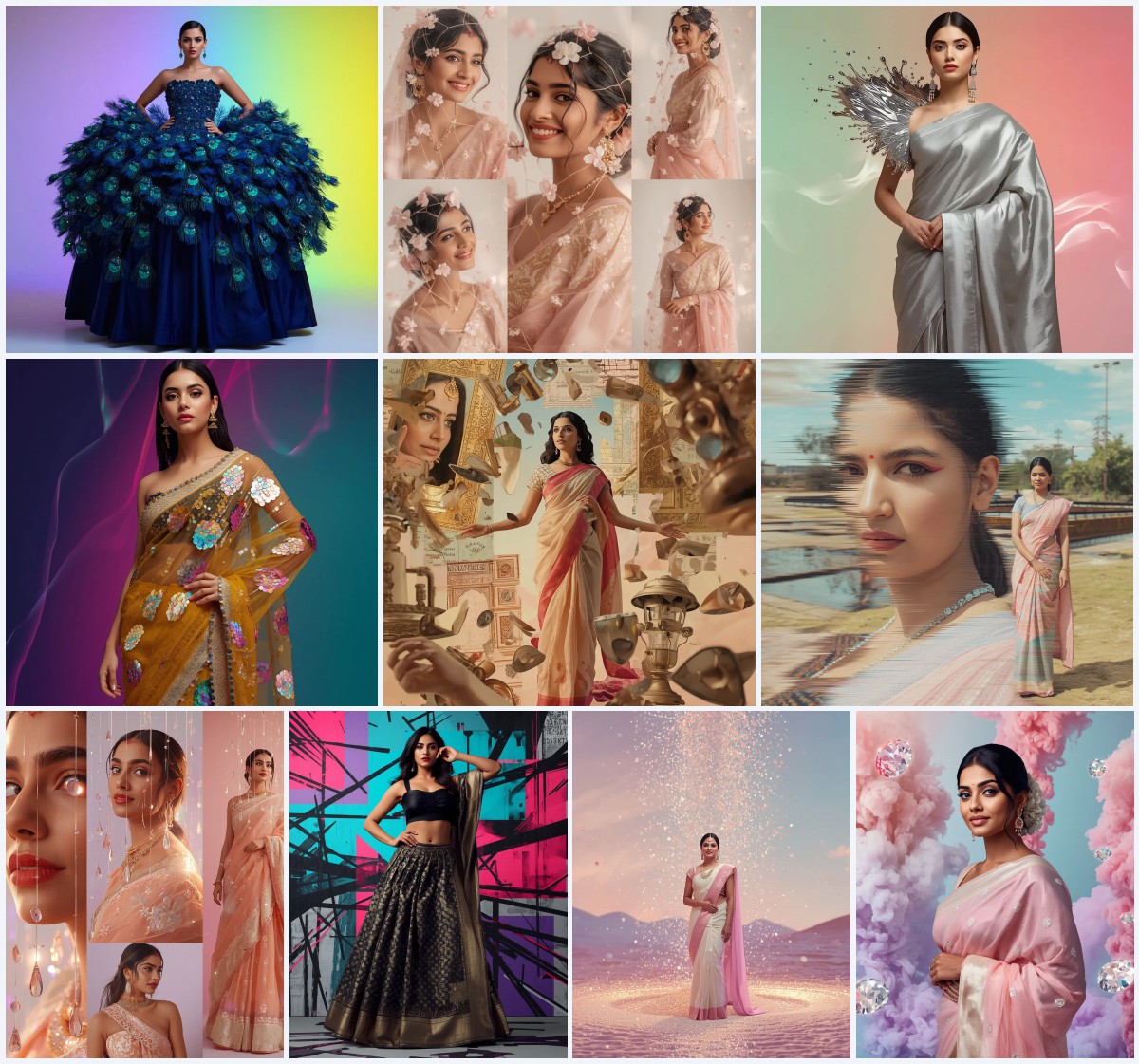
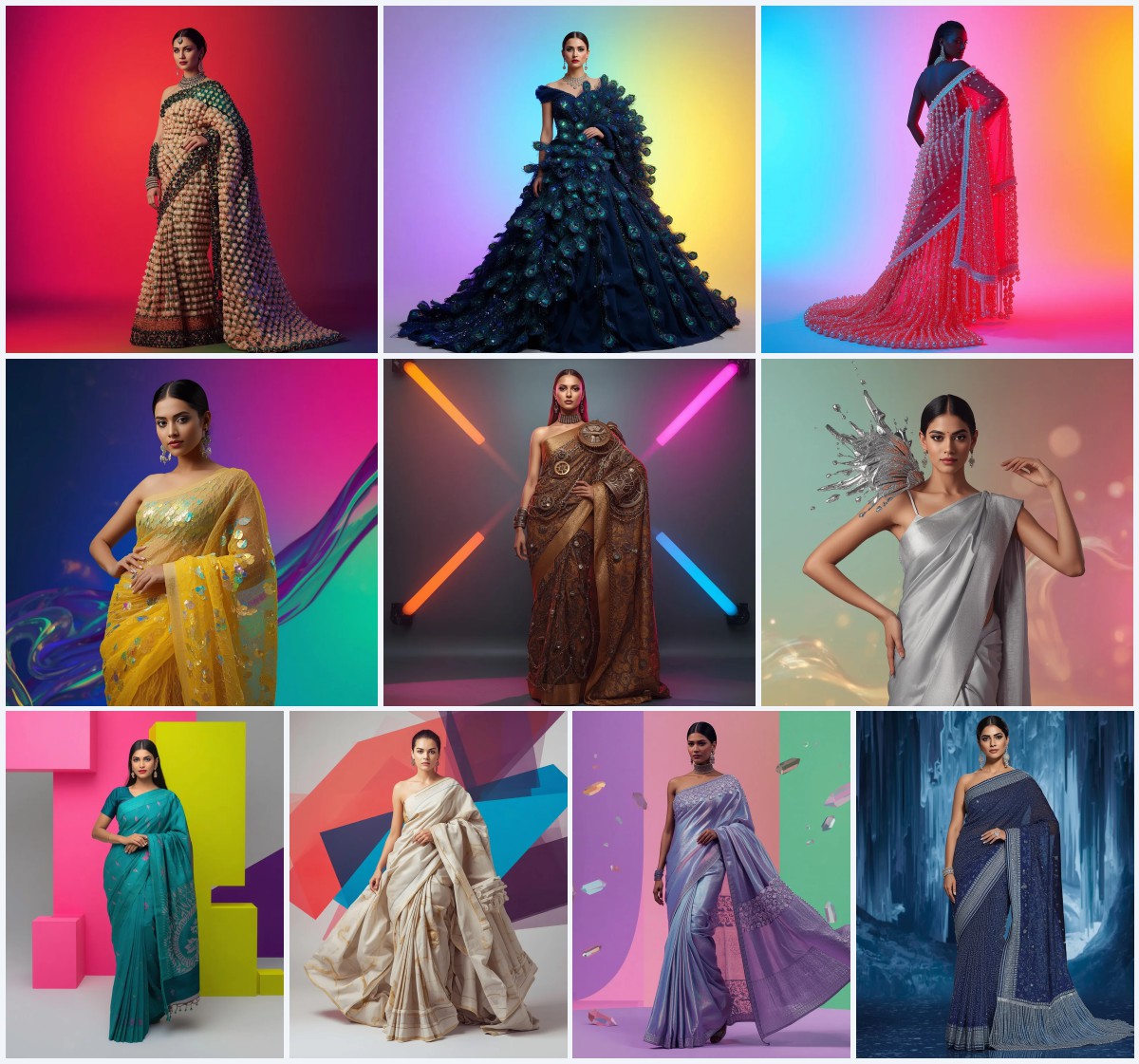
Diverse Saree Visuals refer to a category of AI-generated imagery that showcases the traditional Indian saree in a wide variety of artistic, cultural, and technological contexts. Instead of relying solely on standard portrait photography, these visuals push the creative envelope by integrating complex design elements. This includes multi-frame collages, surreal environments, historical artifacts, and futuristic digital structures that interact harmoniously with the subject's attire. The goal is to highlight the adaptability of the saree, proving that it fits just as beautifully in a high-tech sci-fi setting or a minimalist modern art gallery as it does in a traditional festive celebration.
These visuals often feature a mix of close-up portraits, profile shots, and full-body elegant stances within a single composition. By utilizing advanced prompt engineering, creators can specify the exact material of the saree—such as flowing chiffon, structured silk, or delicate pastel tulle—while surrounding the subject with thematic elements like falling crystal droplets, glowing diya lamps, or ancient Sanskrit text. This approach transforms a simple fashion portrait into a multi-layered story, capturing different facets of the subject's expression, mood, and grace in a single, cohesive digital artwork.
Why Diverse Saree Visuals Is Trending
The trend of generating Diverse Saree Visuals is driven by a global appreciation for South Asian fashion combined with the limitless possibilities of generative AI. On platforms like Instagram, Pinterest, and TikTok, users are constantly seeking unique visual aesthetics that stand out in crowded feeds. Traditional photoshoots can be incredibly expensive, logistically challenging, and limited by real-world physics. AI image generation removes these barriers, allowing creators to place a model in a storm of glowing pearl dust or surrounded by flash-frozen diamond smoke sculptures without a massive production budget.
Furthermore, this trend taps into a sense of cultural pride and modern identity. Young South Asians love seeing their heritage represented in contemporary, futuristic, and high-art spaces. By blending traditional garments with modern digital design trends—such as neon frames, abstract brushstrokes, and clean gallery backgrounds—these prompts create a bridge between the past and the future. It allows for a form of creative self-expression that is highly shareable, visually arresting, and deeply meaningful to a wide audience.
Popular Styles You Can Create
With our curated list of prompts, you can explore a vast array of artistic styles. Here are some of the most popular styles you can generate using these diverse saree visuals:
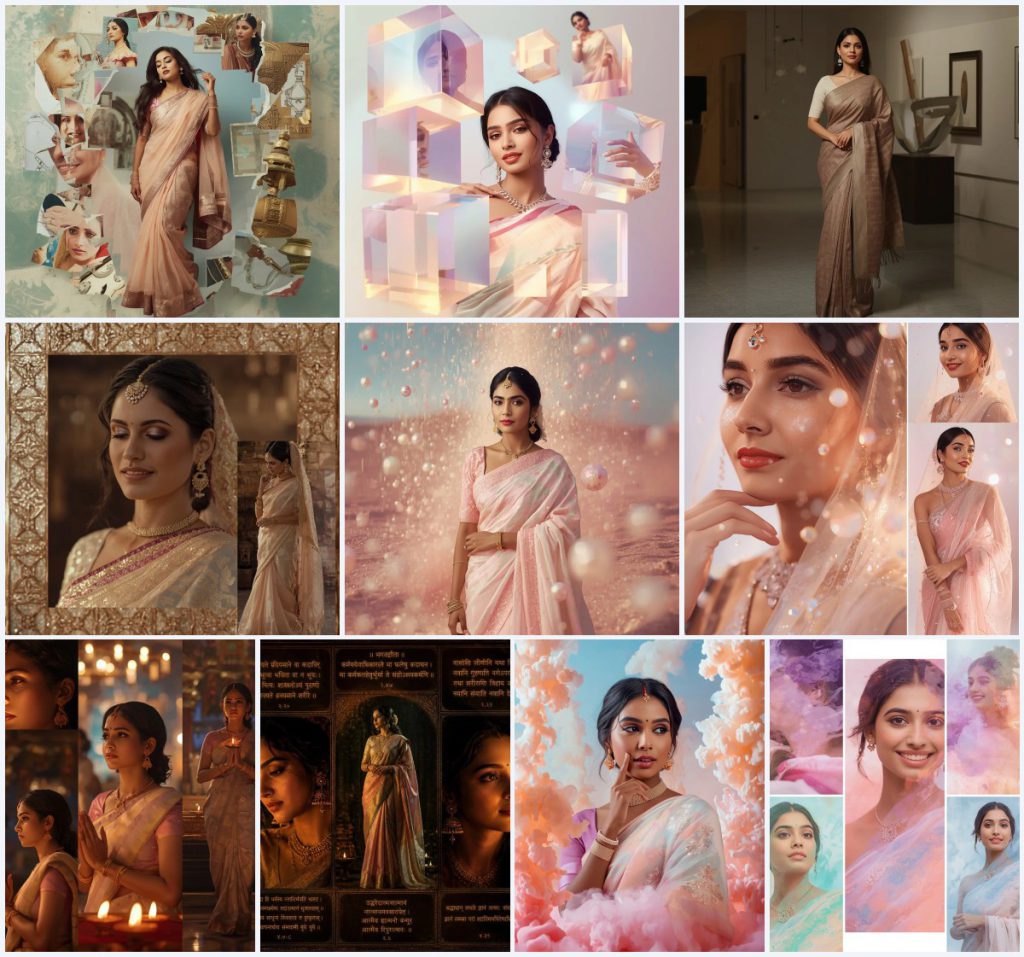
- Cinematic Retro-Futuristic Collage: Blends an Indian woman in a festive pastel saree with deconstructed historical artifacts and advanced brass and glass tech components.
- Modern Digital Cube Aesthetic: Features semi-transparent light cubes reflecting soft pastel tones, creating depth and a premium digital structure around the model.
- Minimalist Gallery Style: Places the subject in a modern art gallery with clean lines, subtle lighting, and abstract sculptures to highlight the contemporary design of the saree.
- Traditional Mosaic Frames: Surrounds the subject with delicate, shimmering rice grain mosaic patterns in intricate geometric and symbolic designs.
- Luxury Pearl Dust Storm: Places the model in a serene landscape with an endless, heavy torrent of microscopic, glowing pastel pearl dust falling like luminous sand.
- Surreal Crystal Rain: Enhances the composition with falling crystal droplets of varying sizes that interact naturally with the light to create realistic reflections.
- Spiritual Diya Lighting: Creates a warm, intimate atmosphere with borders made of glowing, traditional diya lamps casting warm orange and yellow light.
- Mystical Sanskrit Script: Frames the subject with glowing, ancient Sanskrit text in luminous gold against a contrasting dark background.
- Avant-Garde Diamond Smoke: Features thick pastel smoke plumes magically flash-freezing into solid, flawless diamond sculptures in mid-air.
- Dreamy Watercolor Wash: Softly blends pastel shades like lavender, peach, mint, and sky blue across the frames for an artistic, painterly quality.
How to Use Diverse Saree Visuals
Using these prompts is incredibly straightforward, even if you are completely new to AI art generation. The key to getting the best results lies in selecting the right prompt, understanding its core components, and knowing where to paste it. These prompts are designed to be highly descriptive, providing the AI with clear instructions regarding the subject, clothing, background elements, lighting, and overall composition. This level of detail ensures that the generated image closely matches your creative vision.
To begin, you simply need to choose one of the ten prompts provided in this article. Each prompt is optimized to balance the traditional aspects of the saree with a unique thematic background. You can copy the prompt exactly as written, or you can customize specific details—such as the color of the saree, the facial expressions of the model, or the intensity of the lighting—to better suit your personal project. Once you have finalized your prompt, you are ready to feed it into your chosen AI image generation tool.
- Select your favorite prompt from our list of diverse saree visuals.
- Copy the text of the prompt to your clipboard.
- Open your preferred AI image generator platform on your computer or mobile device.
- Paste the copied prompt into the text input box of the generator.
- (Optional) Modify key details such as saree color (e.g., change 'pastel' to 'royal blue') or background elements to customize the image.
- Set your desired aspect ratio (such as 9:16 for Instagram Stories or 1:1 for standard posts) and click "Generate".
- Review the generated outputs, select the best version, and download your high-resolution artwork.
What Kind of Base Photo Works Best?
If you are using an AI tool that allows for image-to-image generation or face-swapping, starting with the right base photo is critical to achieving a natural and high-quality result. The ideal base photo should feature clear, high-resolution lighting that matches the mood of the prompt you intend to use. For example, if you are generating a scene with warm, glowing diya lamps, a base photo with warm, directional lighting on the face will blend much more seamlessly than one with cold, flat office lighting.
Additionally, the posture and camera angle of the base photo should align with the desired output. A straight, front-facing portrait is perfect for close-up frames, while a graceful, three-quarter angle or full-body shot works best for showcasing the elegant drape and flow of the saree. Ensure that the hair is styled cleanly and that there are no harsh shadows obscuring the facial features, as this allows the AI to map the traditional elements and festive makeup with maximum precision and realism.
Which AI Tools Deliver the Best Results?
There are several powerful AI image generation platforms available today where you can paste these prompts to achieve stunning results. Each tool handles textures, lighting, and cultural garments slightly differently, so choosing the right platform depends on your specific creative goals and aesthetic preferences.
| AI Tool | Strengths | Best For |
|---|---|---|
| Midjourney | Incredible realism, cinematic lighting, and highly detailed fabric textures like silk and chiffon. | High-end, professional-grade fashion illustrations and complex collages. |
| Flux | Excellent text rendering (perfect for Sanskrit prompts) and highly accurate anatomical details. | Prompts requiring precise structural elements, text, and clean borders. |
| Leonardo | Great control over artistic styles, user-friendly interface, and excellent preset models. | Dreamy watercolor washes and creative, fantasy-themed saree art. |
| ChatGPT | Convenient, intuitive conversational interface that generates highly creative and varied interpretations. | Quick concept generation and rapid prototyping of different saree styles. |
| Gemini | Fast rendering times and clean, vibrant color outputs with great contrast. | Bright, festive, and highly saturated social media graphics. |
Pro Tips
To elevate your AI-generated saree visuals from good to extraordinary, keep these professional tips in mind. First, pay close attention to fabric descriptions. Adding words like "heavy 24k gold leaf appliqués," "premium flowing chiffon," or "intricate zari embroidery" helps the AI understand the specific textures and reflective qualities of the garment. Second, experiment with lighting prompts; using terms like "luminous micro-pearl refraction," "diffused painterly lighting," or "warm orange flickering glows" will create a much more immersive and three-dimensional atmosphere.
Additionally, when generating collages, specify the framing layout clearly. Instructing the AI to include "a glowing close-up portrait, a soft smiling profile, and an elegant full-body pose" ensures a diverse and balanced composition. Lastly, don't hesitate to run the same prompt multiple times or slightly adjust the weight of certain words to fine-tune the facial features, hand placements, and overall layout of the final image.
Common Issues and Quick Fixes
Generating complex imagery like traditional Indian attire with intricate backgrounds can sometimes result in minor visual errors. Understanding how to address these common issues will save you time and help you produce flawless digital art.
| Common Issue | Root Cause | Quick Fix |
|---|---|---|
| Deformed hands or fingers | AI struggles with complex hand anatomy, especially when holding objects like diyas. | Add "perfect hands, detailed fingers" to the prompt, or use an inpainting tool to regenerate only the hand area. |
| Garbled Sanskrit or text borders | Many AI models struggle to render specific non-Latin scripts accurately. | Use Flux for better text generation, or describe the text as "abstract glowing golden calligraphic patterns" instead. |
| Muddled or blurry watercolor blends | The AI blended the colors too much, losing the definition of the subject. | Increase the prompt weight on "sharp focus on subject" and "clear, defined edges" to separate the model from the background. |
Frequently Asked Questions
How can I change the color of the saree in these prompts?
You can easily customize the saree color by replacing the word 'pastel' or specific color terms in the prompt text with your desired shade, such as 'royal blue', 'crimson red', or 'emerald green', before pasting it into your AI generator.
Which AI tool is best for rendering realistic fabric textures like silk or chiffon?
Midjourney and Flux are highly recommended for capturing intricate fabric textures, gold leaf appliqués, and the delicate folds of a traditional Indian saree, producing ultra-realistic 8k resolution results.
Can I use these prompts to create single-image portraits instead of collages?
Yes, you can. Simply remove words like 'collage', 'deconstructed', or 'multiple frames' from the prompt text, and instruct the AI to generate a 'single full-body portrait' or a 'focused close-up portrait' instead.
Conclusion
Creating diverse saree visuals using AI is an incredibly rewarding way to celebrate traditional Indian culture while embracing the cutting edge of digital art. By combining the classic elegance of the saree with surreal, modern, and futuristic elements, you can generate images that are truly unique and captivating. Whether you choose the mystical allure of Sanskrit text frames, the luxury of falling crystal droplets, or the soft beauty of a watercolor wash, these prompts provide the perfect foundation for your creative journey. Explore the different tools, apply our pro tips, and start creating gorgeous, high-resolution fashion art that commands attention on any platform.